The Science of Meditation
In this six-part blog series, we share insights from the latest scientific research on how meditation fundamentally changes the brain to improve our mental and physical health. With this, we seek to bridge the gap between ancient practices and modern neuroscience to show how training the mind can lead to a more balanced life. In the first post, we described meditation as a "toolkit" for well-being and introduced the two main styles: focused attention (Samatha) and open awareness (Vipassana). In the second post, we discussed how meditation quiets internal noise. In the third post, we explored how to stay more vividly in the present moment. In this fourth post, we explore how meditation adds "richness" and flexibility to our thinking.
The fifth post discusses finding a "sweet spot" of mental balance. The sixth and final post shares how these temporary states eventually become permanent parts of who we are.
Part 4: Finding Mental Richness at the Canvas
Do you ever feel like your thinking has become rigid or "gray"? Sometimes we get stuck in the same mental ruts, seeing the world through the same limited lens every day. We think we are "one way" — a heavy-handed worker, a slow learner, or a rigid thinker.
But science and art both tell us a different story: the obstacles we find are rarely outside of us.
The Apprentice and the Angel
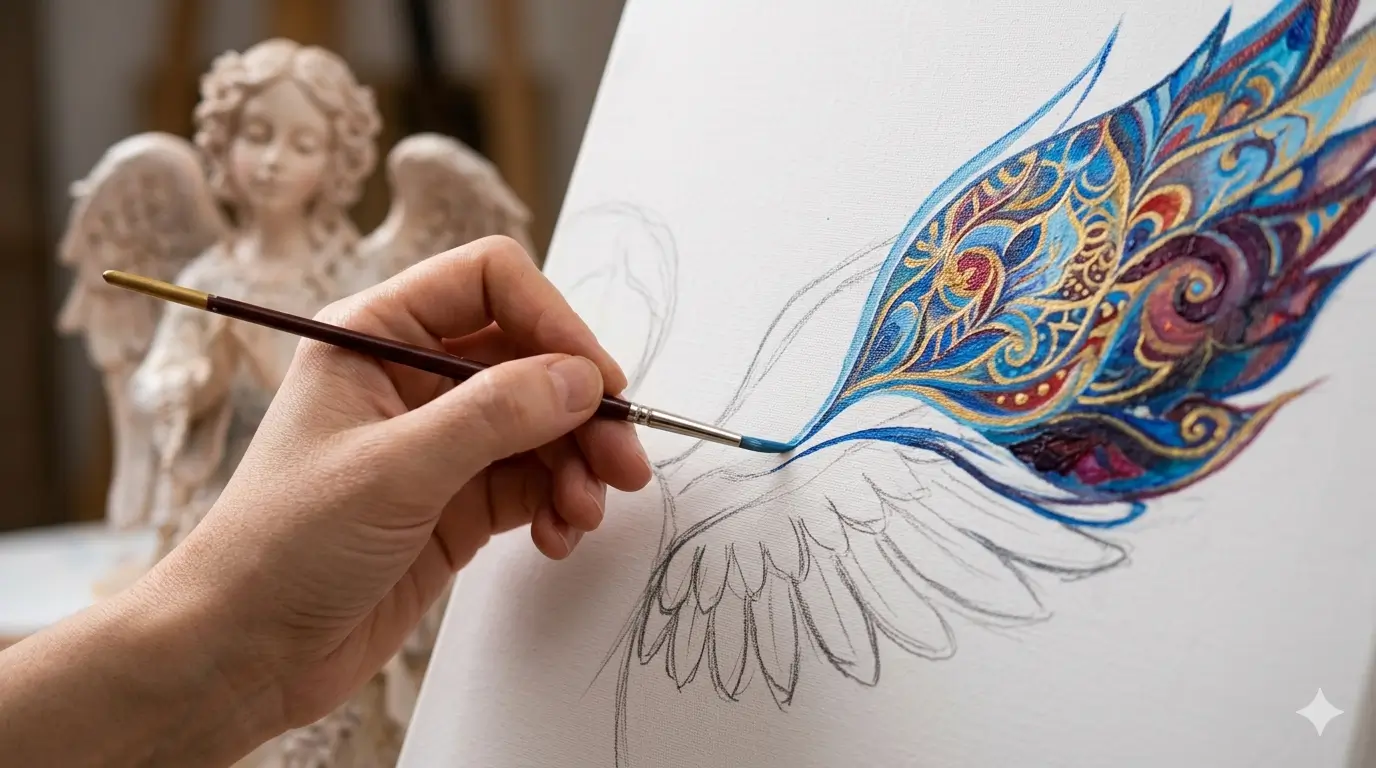
I have always been fascinated by painting. It's a passion that has been with me since I was a child, though I've never studied it formally. I am a novice — an apprentice — and I love the challenge of facing a blank canvas with a target that feels "too big" for me.
Recently, I chose a piece that felt impossible: a sculpture of an angel with delicate, handmade details and fine features.
For someone like me, who feels more comfortable painting "wild" targets like lions and tigers, with a heavy hand, this required more than just focus: It required becoming someone I didn't know yet.
Breaking the "Hammer"
I approached the canvas full of doubt. My hand was shaking; my right arm felt like a heavy hammer. With this limited toolkit, I drew my first line and felt I had failed before I even began.
Then, an inner voice spoke: "Relax your hand. Trust it knows how to paint."
I listened. I chose to step into a state of open awareness. My whole body relaxed, and I found a new, fresh path in my mind. The result? I finished the portrait in a day and a half — a task that usually would have taken me weeks of constrained, rigid thinking.
The Science: Why "Relaxing" Makes You Richer
You might think that "relaxing" or meditating makes the brain "blank," but the opposite is true. It actually makes brain activity richer and more complex.
1. The Dynamic City Map
Instead of driving down the same single-lane road every day, practicing open awareness is like upgrading your brain to a dynamic city map with endless routes. When I stopped trying to force the "hammer" to work, my brain accessed a more diverse repertoire of patterns.
2. Complexity Equals Creativity
A "richer" brain is a more adaptable one. Scientists have found that this increased complexity is linked to:
- Higher creativity: finding "good-enough" alternatives you never saw before.
- Emotional flexibility: moving past the "shaking hand" of anxiety.
- A more colorful life: shifting from a gray, rigid perspective to one that is wide and vibrant.
Try It Yourself: The 5-Minute Expansion
You don't need a canvas to experience this. You only need to stop filtering your experience so strictly.
- Spend 5 minutes in "open awareness." Don't try to focus on anything specific.
- If a bird chirps, notice it. If your knee itches, notice it.
- Allow your mind to be as wide as the sky.
Final Thought
Whether you are painting an angel or navigating a difficult day at work, remember: the "heavy hand" is often just a habit. When we relax and trust the process, we realize that the diversity and "mental richness" we need to succeed is already within us.
In meditation I give up the external world and let my inner-being come forward. I start to know who I really am.